At GulabBagh Mandi, a lot's grade decides the price it settles at. Consistent grading lets buyers and sellers compare reported rates on equal terms, so the same sack is read the same way on every auction day.
Maize, paddy, and jute each carry their own criteria. Knowing them before you reach the auction floor helps you judge whether a quoted rate matches the quality you brought in.
Each commodity is read against its own physical specifications.
Maize
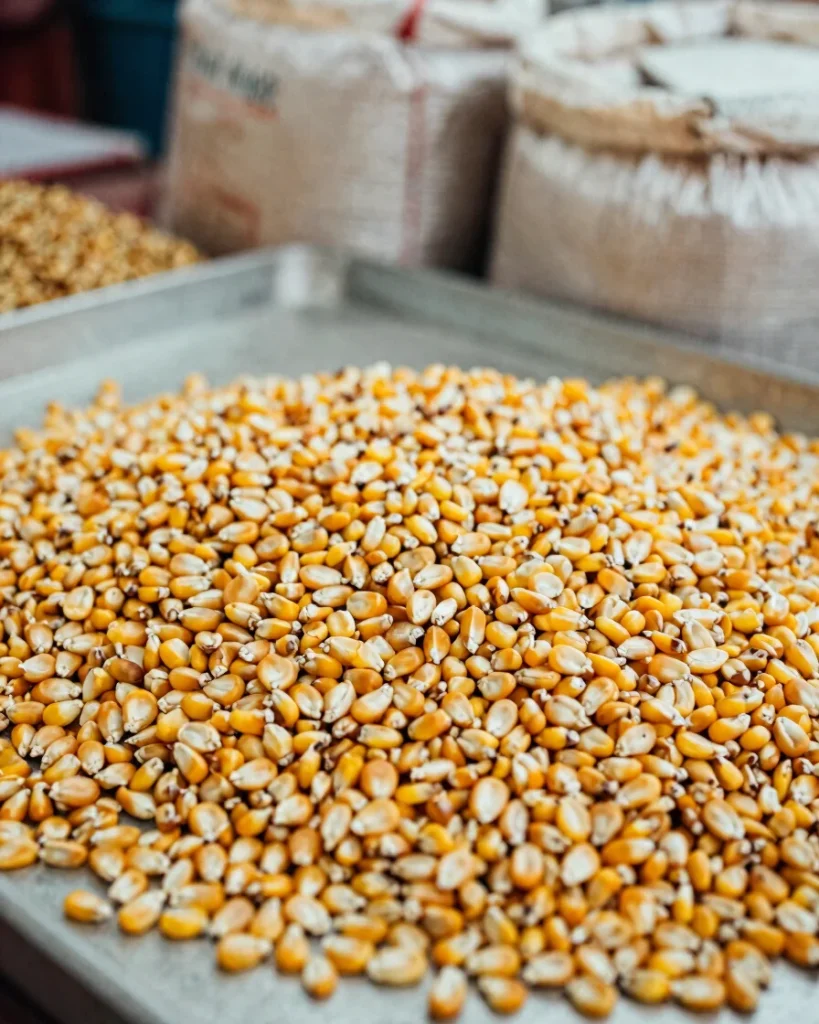
Yellow maize grain
Graders check kernel colour, cleanliness, and moisture content. Lots are assessed for foreign matter and broken grain before they are weighed for sale.
Paddy
Fine and coarse paddy
Varieties are separated into fine and coarse grades. Graders assess husk condition, grain length, and the share of unfilled or damaged grains in each sample.
Jute
Raw jute fibre
Fibre length, luster, and colour determine the sorting grade. Clean, evenly dried fibre baled to standard is assessed more favourably than mixed or damp bales.
Verification
How lots are inspected
01
Draw a representative sample
Assessors draw samples from several points in the sack so the grade reflects the whole lot, not just the top layer.
02
Measure moisture
A moisture gauge reads each sample. Lots above the permitted moisture limit are flagged before any grade is assigned.
03
Check physical quality
Samples are examined for colour, foreign matter, and damaged grain or fibre against the commodity benchmarks.
04
Record the grade
The confirmed grade is entered against the lot, and that grade feeds into the settlement price shown in the day's update.